
Estrangement
This post is in response to the current narrative of “trend” and by no means does it quantify the complexity of going “no contact”.
Before Covid-19, my social media feeds talked about generalised anxiety disorder. Towards the end of 2020, my feeds began to explore neurodiversity, and in particular attention-deficient hyperactivity disorder and now what appears to be the latest social media trend is estrangement. I state “social media trend” as for me, estrangement has not and will never be a trend, despite an overarching narrative which includes Oprah Winfrey’s Podcast and a recent Wall Street Journal article validating this narrative.
In fairness to Oprah, she did attempt to look at estrangement from all angles. However, the recent WSJ article specifically aims to shoulder the responsibility at therapists, exploring our role in the rise of “going no contact”. Pulling on early-stage research and the viewpoints of experts. For me, the article was biased, only quoting one family therapist with an opposing viewpoint compared to the eight experts and one case study. The research they referred to is a preliminary survey of 7000 estranged parents only, with a third of them believing their child’s therapist had influenced them to go no contact.
The keyword here is believe!
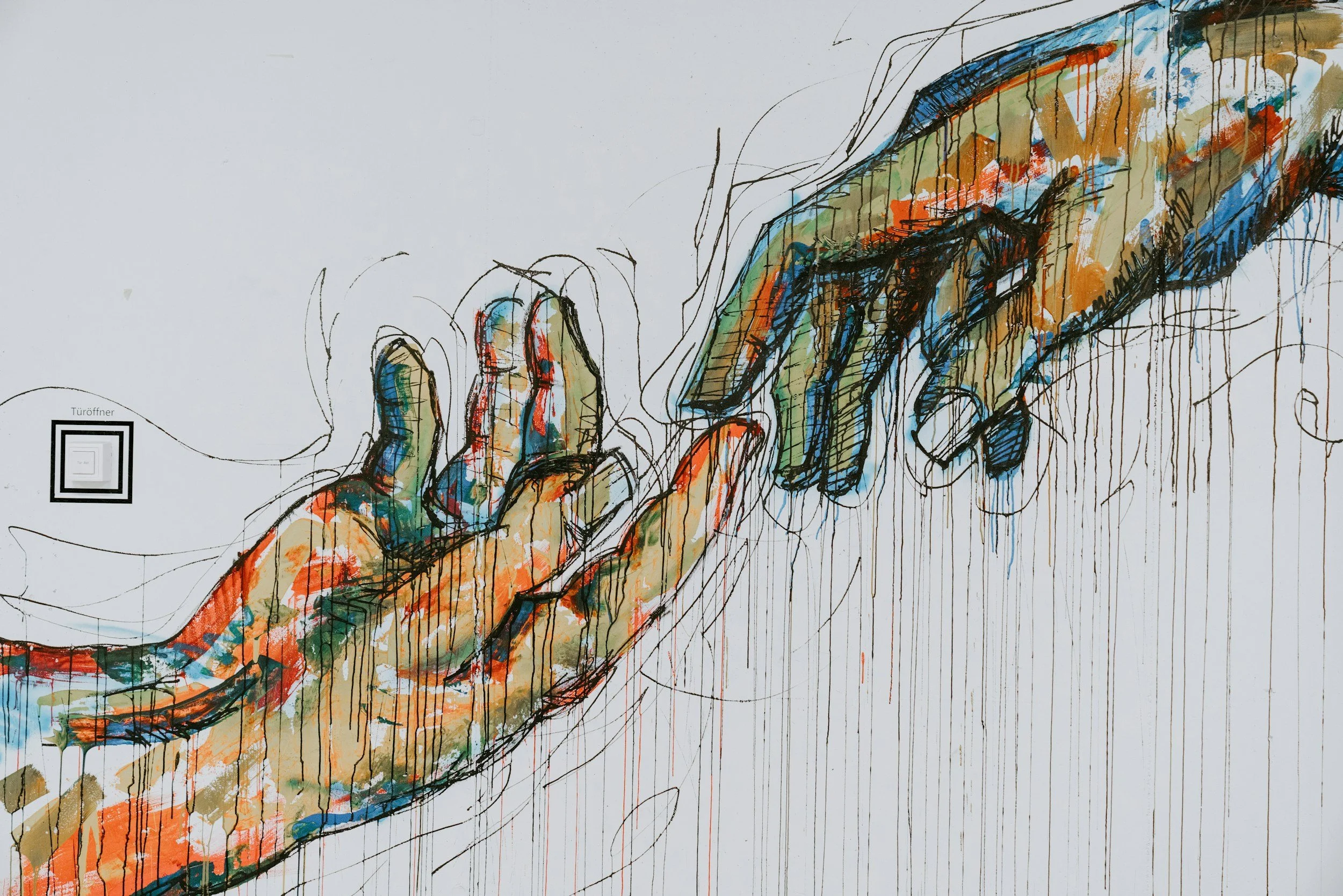
A drawing depicting two hands reaching out towards each other.
Furthermore, my own personal and clinical experience with estrangement leads me to find the term “trend” offensive. I find the narrative that therapists actively encourage going no contact both incorrect and jarring. Going no contact is a significant decision, and my own experience and clinical work suggest that it is a last resort. Like many estranged adult-children, I returned to therapy post “no contact”. I was therefore not in therapy at the time of the initial estrangement, and neither was I ever encouraged to stay no contact, or ever told to go “no contact”.
Why Estrangement Happens
Healthy separation from family is part of the package between children and parents. The need to build an independent identity, make personal choices, and set clear personal boundaries while keeping a respectful connection is how we stay in contact. Therefore, to believe that estrangement is new and/or trendy is an assumption. For many people, estrangement is clear when emotional, physical or sexual abuse or neglect was involved and is even considered acceptable. Often, though, there can be a mismatch in lifestyle, which sometimes includes an accumulative aspect of negative and impactful events. These could include:
· Identity and Lifestyle, e.g. LGBTQI+, religion
· Political views, e.g. Strong right or left viewpoints
· Cultural clashes, e.g. Intercultural and traditional
· Obvious favouritism amongst siblings, e.g. Golden child/Scapegoat
· Change in family dynamics, e.g. divorce or remarriage of parents
The Roll of Constant Contact
Historically, families were built on duty, survival, and mutual obligation rather than personal happiness; to believe that “cutting ties” didn’t occur, even if situational through geography, for me is naïve. Modern society relies heavily on technological advances that help us to stay in touch, which a century ago didn’t exist. For instance, travelling around the 1800s from London to Edinburgh was reduced from 12 to 4 days (Bogart, 2004). Therefore, there was no nipping to London. Travelling abroad took months. Amazon Prime did not exist, and before Royal Mail, letters and parcels, although potentially quicker than travelling, would take weeks or months. All of which in some ways would have hindered family relationships to limited or “no contact”, along with providing healthy separation (space) for all parties.
“Just because I am available doesn’t mean I’m free” Unknown
Furthermore, shouldn’t we question if technological advances hinder relationships? Historically, physical boundaries (distance) created space, whereas today, at any point, we can be interrupted, phones demanding our attention, and the world is now very 24/7. The expectation is that I am calling, you should respond immediately. When we went on holiday, we might notify someone we arrived safely and send a postcard, now we are contactable through our mobiles. This is not a break or the space to switch off. Constant contact can also be considered unhealthy and shouldn’t be ignored as potentially why some people feel their boundaries are being trampled over, and maybe this plays into what society sees as extreme measures
Conclusion
Just because someone believes it is true doesn’t make it true
It is very easy to blame the third party in the demise of any relationship; the therapist is the easy target. Who would not engage in defending themselves, which some of the article’s comments seem to require. For confidentiality and data protection, therapists cannot engage in third-party disclosures without written permission from the person they see. And, if I am honest, if I were to be contacted by a parent of an estranged adult-child, for them to want to tell me their side of the story, I would not engage. Furthermore, I would consider this a breach of boundaries and potentially highlighting why the person I’m working with went “no contact”.
And by blaming therapists (or any third party), no one needs to look at their own part in why something happened. Estrangement is complex and misunderstood by most of society. There are consequences for all parties in going no contact, which is something that must be considered and explored carefully. Estrangement doesn’t need more opinion pieces vilifying either side; it needs compassion, empathy and understanding. In addition to robust research, which includes interviewing all parties and not just a one-sided survey, is essential, with the hope that this clarifies the different narratives; furthermore, providing insight into what could potentially aid in repair.
